How did the Kranzler Eck Berlin aviaries come about?
How did the Kranzler Eck Berlin aviaries come about? As part of the large-scale expansion of the area according to plans by Chicago architect Helmut Jahn, Kranzler Eck Berlin was given the 22-meter-high aviaries in the inner courtyard. The building was completed in 2001.
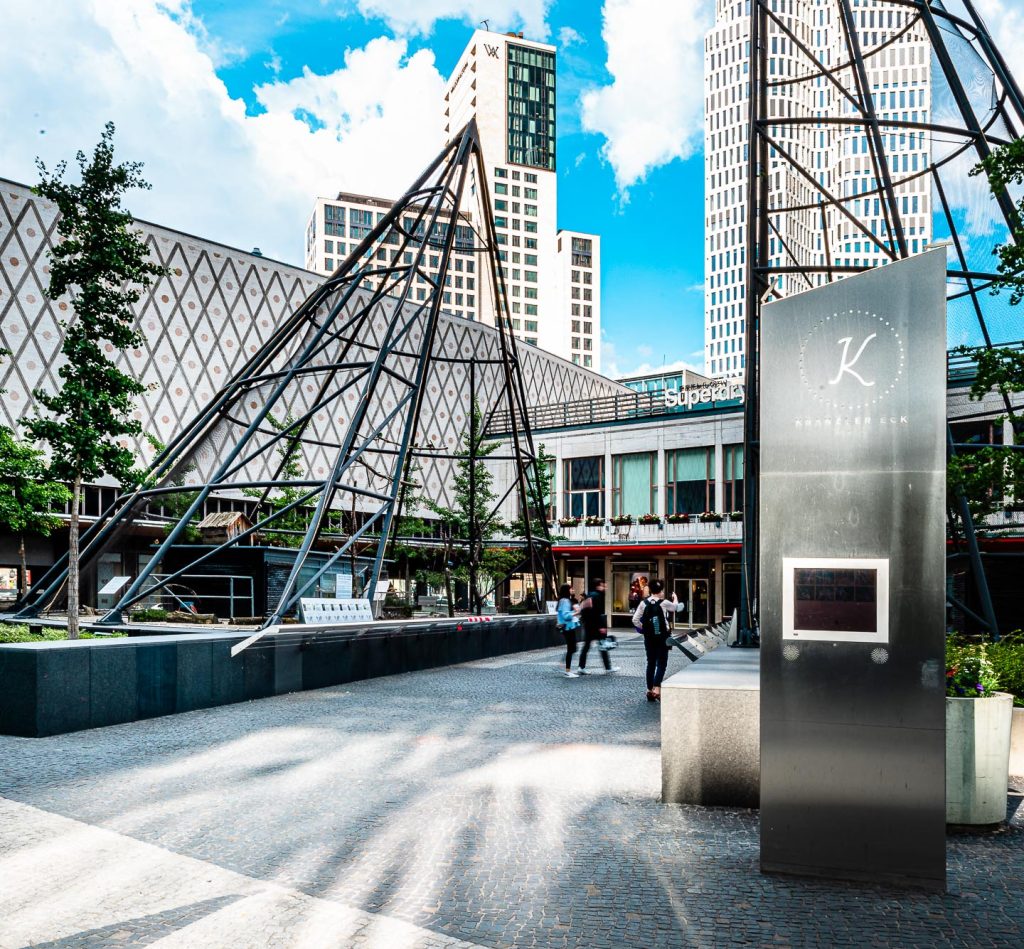
Why are the aviaries being dismantled now?
Various media outlets reported on conversion plans back in 2015. Kranzler Eck Berlin is currently undergoing its next major transformation phase, during which the aviary courtyard is also being redesigned in line with the times: With lots of insect-friendly planting, a pleasant microclimate and consumer-free spaces with a high quality of stay.
How were the birds looked after at Kranzler Eck Berlin?
The professional care of the birds was an important concern from the very beginning. With weekly veterinary inspections, regular examinations and measures such as claw and beak care, the welfare of the animals was ensured.
How many and which birds are housed in the aviaries?
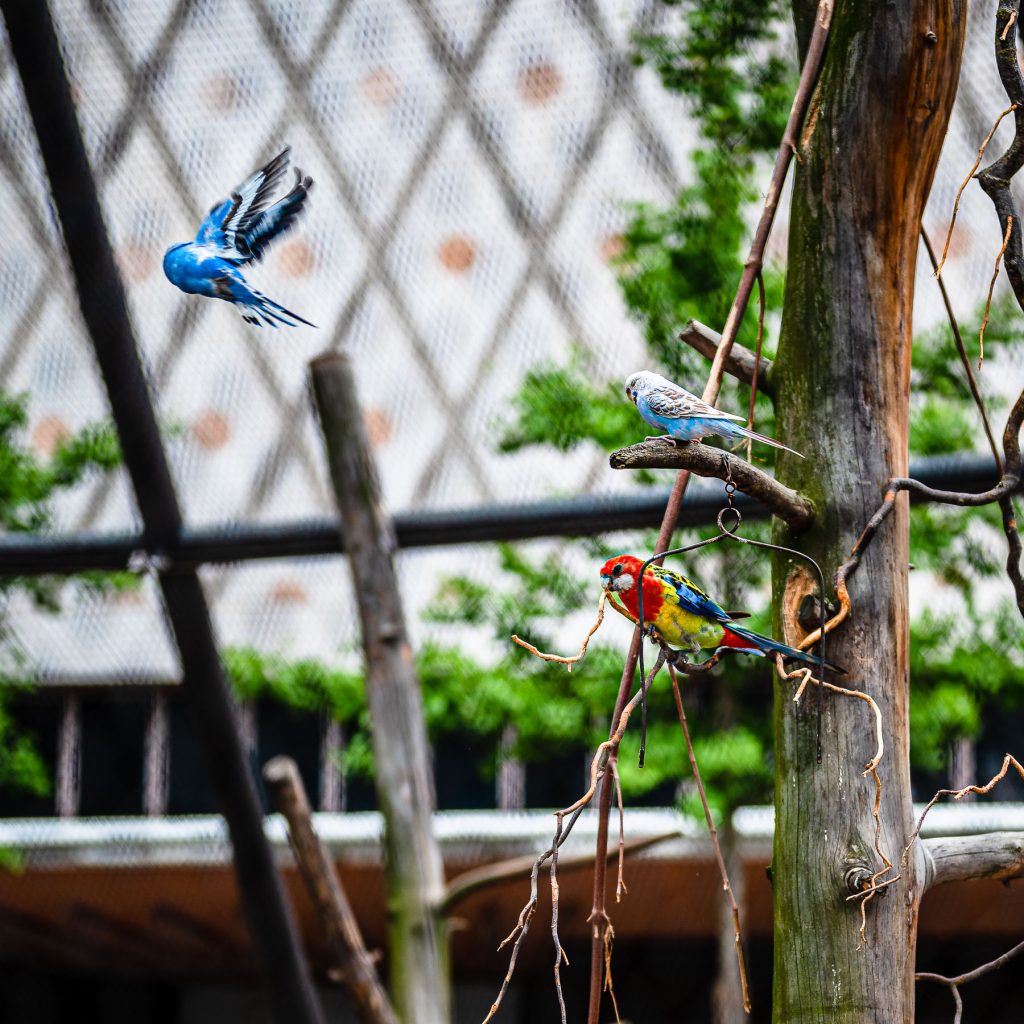
19 parakeets currently live in the aviaries at Kranzler Eck Berlin, including Alexander parakeets, Chinese parakeets, cockatiels, magnificent rosellas, song parakeets, rock parakeets, red-winged parakeets and budgerigars.
How was it ensured that the move was in the best interests of the birds?
During the planning phase, there was an intensive exchange about the optimal procedure with a veterinarian from the Free University of Berlin with the necessary specialist knowledge. These discussions formed the basis for the planning and provided the criteria for selecting the new home. Dismantling the aviary is a complex decision that needs to be carefully considered and in which the needs of the animals kept are a relevant factor.
Where are the birds housed?
The birds move to the Vogelburg Weilrod, in the middle of the Hochtaunus Nature Park. Since 1981, the Vogelburg has been offering parrots – and therefore also parakeets – a home with a particularly high quality of life.
How was the new accommodation selected?
If possible, all 19 birds should be able to move into a new, spacious home together. In addition, conspecifics should not be separated from each other, but ideally even find conspecifics in their new home. Parakeets are highly sensitive, social animals, which means that similar company is extremely important for their well-being.
Vogelburg Weilrod was able to reliably fulfill each of these factors and agreed to take in all 19 birds.
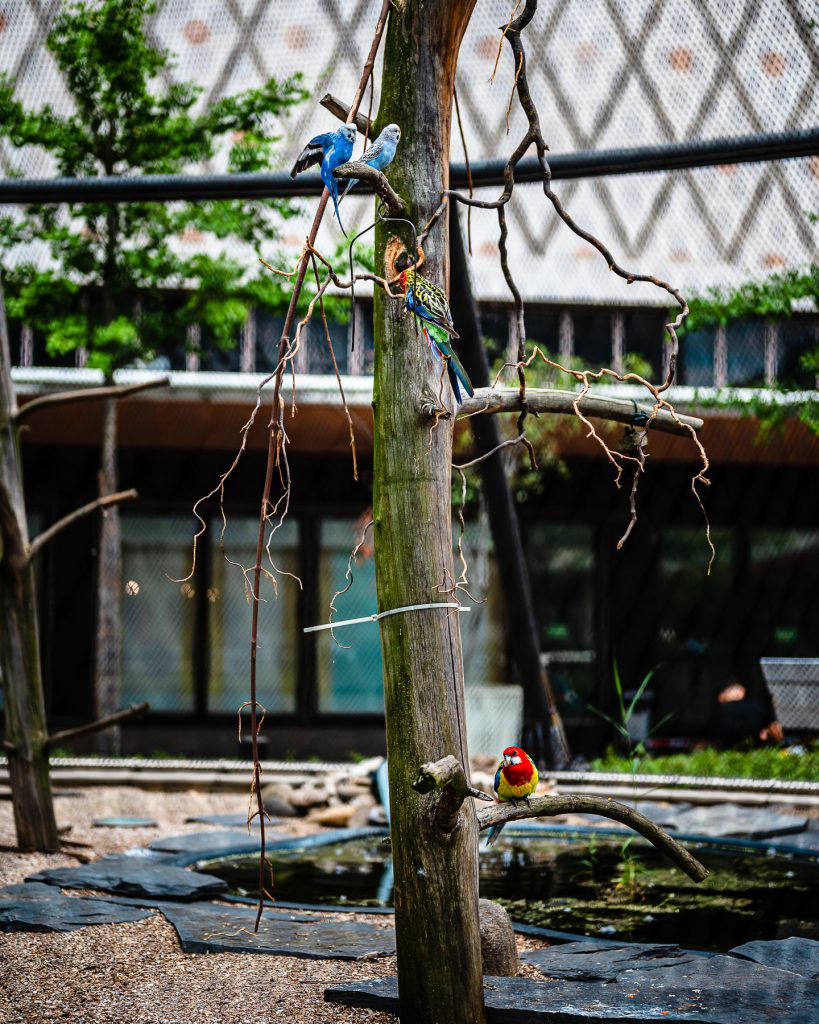
How do the birds get to their new home?
The move took place as recommended by the vet: The birds were first gently acclimatized to large wooden crates, which were to be used for the journey to their new home. An organization that specializes in animal-friendly transport is commissioned to do this.
Why were the birds not released into the wild?
All the parakeets that inhabited the aviaries at Kranzler Eck Berlin are bred species. They have never learned to hunt and survive in the wild. In addition, bred bird species wear color morphs – i.e. plumage – that do not occur in nature. The animals would therefore never find a connection to flocks of wild birds and mating partners. For these reasons, moving to new accommodation is the best option for the birds.
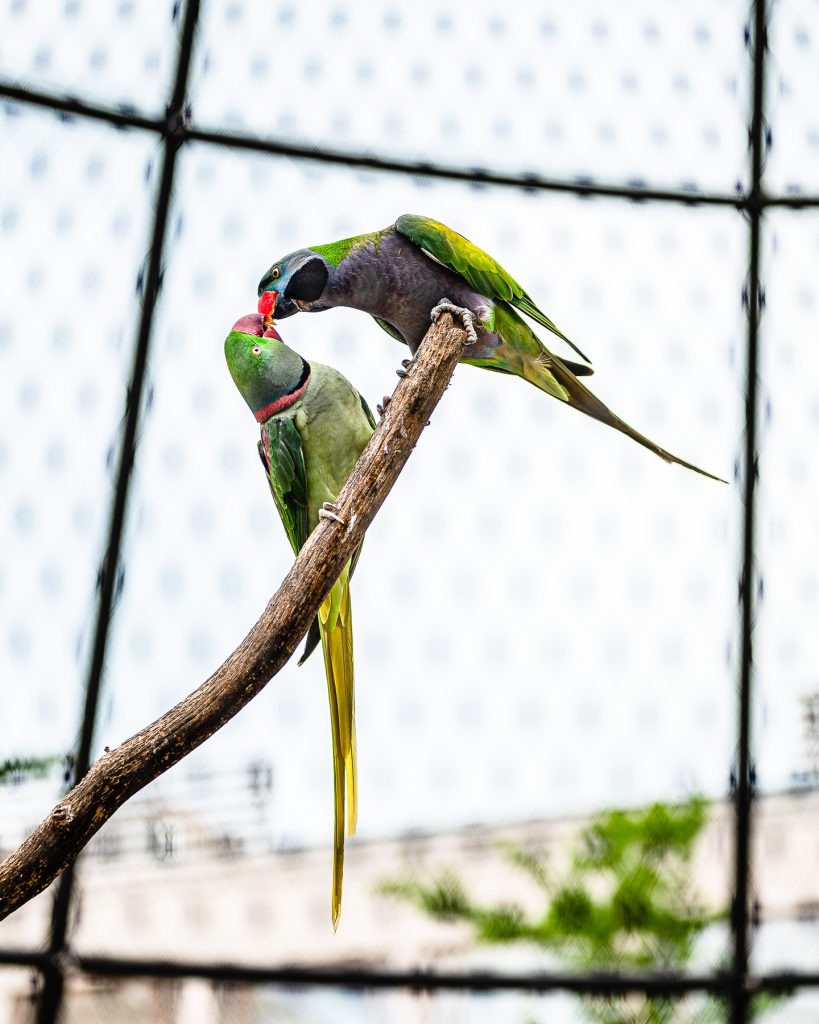
Can I still visit the birds?
Yes! The birds and the Vogelburg Weilrod are very happy to welcome visitors. The current opening hours of the bird park can be found at www.vogelburg.de.
Can I do anything for the birds?
Vogelburg Weilrod is financed exclusively by admissions and memberships. So to support them, the best idea is to take a trip to the Vogelburg and say hello to the birds there!
